12 MIN READ
Therapeutic massage
When Should You See a Therapist for Muscle Tightness?
AUTHOR
Dennis Lacalle, DPT
Exploring mitochondrial density as the ultimate ceiling for professional endurance performance and recovery efficiency.
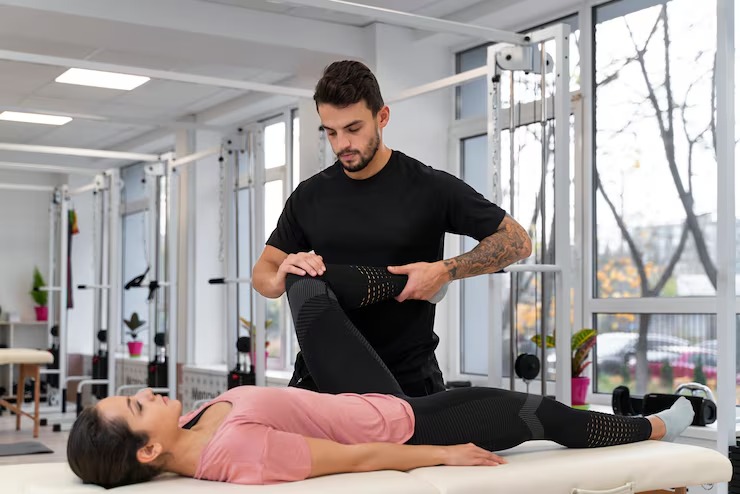
You get out of bed, and your lower back feels wrong somehow. Tight in a way that wasn’t there yesterday. Was it the long drive home or skipping gym sessions? While you might just shrug it off, knowing when to see a Therapeutic massage can save you weeks of discomfort. You rub it, shrug, and get on with your day.
That’s how muscle tightness usually starts. It doesn’t announce itself. It just sort of moves in, a knot in your neck, calves that feel like rope after a jog, hips that never really loosen no matter how much you stretch them. Because none of this seems urgent, most people live with it far longer than they need to.
So when does “a little tight” become “you should talk to someone”? Here’s how to tell.
Most Tightness Isn't a Big Deal
Let’s start with the reassuring part. Muscles tighten up for all sorts of boring, normal reasons. A hard leg day. A long car ride. Stress you didn’t even notice you were carrying in your shoulders until someone pointed it out. This kind of tightness usually fades on its own in a few days.
Rest, some water, a bit of gentle movement, that’s often all it takes. If it’s gone within a week and doesn’t come back once you’re moving normally again, you’re probably fine.
But there are patterns that deserve more than a shrug. That’s what we’re really here to talk about.
Signs It's Time to See a Therapist for Muscle Tightness
Most people wait way too long on this. They tell themselves it’s just stress, or bad posture, or getting older, and then six months later they’re still cracking their neck every twenty minutes without thinking about it.
Here’s when it’s worth booking a therapist for muscle tightness instead of just waiting it out:
It’s been more than two weeks. Normal tension eases up within a few days. Two weeks of the same tightness, in the same spot, usually means your body is asking for more than rest.
You’ve lost flexibility. Maybe you can’t turn your head as far, or touching your toes suddenly feels like a real effort. That’s not just tightness anymore ,that’s a change in how your body moves, and it’s worth paying attention to.
There’s pain mixed in, not just stiffness. Stiffness that loosens once you warm up is one thing. Tightness that actually hurts, or seems to travel somewhere else in your body, is different.
It’s messing with your sleep. Can’t get comfortable at night? Waking up just as tight as when you went to bed? That’s often a sign something deeper is going on.
Something specific set it off. A weird lift at the gym. An awkward twist reaching for something in the back seat. If the tightness followed one clear moment and just hasn’t let go since, don’t wait it out ,get it looked at.
You feel weaker, too. If the area doesn’t just feel tense but genuinely weaker, or you catch yourself compensating to do things that used to be easy, that combination matters more than tightness alone.
It’s changed how you live. Skipping workouts. Sleeping differently. Avoiding the things you used to enjoy because your body won’t cooperate. If tightness has started shaping your choices, that’s the clearest sign of all.
Why "Just Wait It Out" Usually Backfires
The instinct to stretch it, foam-roll it, and hope it fixes itself is understandable. Sometimes that works. But muscles are sneaky compensators. When one area gets tight and guarded, your body quietly shifts the work elsewhere ,the other side picks up the slack, your posture drifts, and new tension shows up in places that had nothing to do with the original problem.
Give it enough time and a tight calf or a stiff neck can turn into a whole chain reaction running through your back, hips, or shoulders. Seeing a therapist for muscle tightness early on is almost always the faster, simpler path ,before there’s a chain reaction to untangle.
So What Does a Therapist Actually Do?
They’re not going to tell you to stretch more and call it a day. You already knew stretching was an option. What a good therapist actually offers is figuring out why the tightness keeps showing up in the first place, not just where it hurts.
That starts with watching how you move, testing your flexibility and strength, and asking real questions about your job, your training, how you sleep, what a normal week looks like for you. Tightness can come from overuse, from a movement pattern you’ve had for years without realizing it, even from an old injury your body never fully let go of. Two people who both say “my shoulders are tight” can need completely different fixes.
From there, treatment is usually a mix: hands-on work to release the restricted tissue, exercises aimed at whatever weakness or imbalance is actually driving the tightness, and small changes to how you move day to day so it doesn’t just come right back.
The Bottom Line
If it’s lasted more than a couple weeks, if it’s limiting how you move, keeping you up at night, or quietly changing how you live, that’s your answer. Don’t wait for it to get unbearable before you take it seriously.
See a therapist for muscle tightness sooner rather than later, and you’ll actually find out what’s going on. Then you can stop working around it and start fixing it for good.
Full Spectrum Therapy
Expert physical therapy in Folsom, CA. From deep tissue laser to in-home senior care — we restore movement, reduce pain, and help you live life fully.
QUICK LINKS
CONTACT
9580 Oak Ave Pkwy
Folsom, CA 95630
HOURS
Mon – Fri: 8:00am – 6:00pm
Saturday: 9:00am – 2:00pm
Sunday: Closed
FIND US
© 2026 FULL SPECTRUM THERAPIES. ALL RIGHTS RESERVED.