TMJ Disorder
12 MIN READ
Physical Therapy for TMJ Disorder: Symptoms, Causes & Treatment
AUTHOR
Dennis Lacalle, DPT
Exploring mitochondrial density as the ultimate ceiling for professional endurance performance and recovery efficiency.
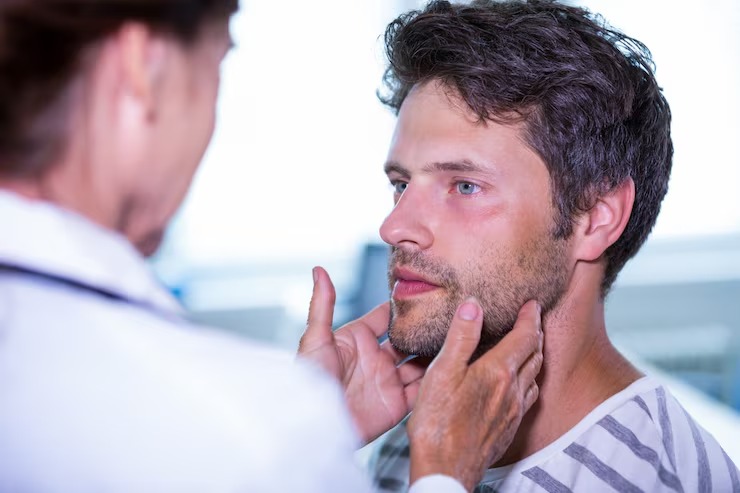
Jaw pain that won’t quit. A clicking sound every time you chew. Headaches that start near your ears and just don’t let up. If that’s you, there’s a good chance you’re dealing with TMJ disorder. And physical therapy is usually the best way to fix it, no surgery, no long-term meds.
It’s worth trying before anything more invasive even enters the conversation.
What is TMJ disorder, exactly
TMJ is short for temporomandibular joint. It’s the hinge that connects your jawbone to your skull, one on each side, sitting right in front of your ears. When that joint, or the muscles around it, stop doing what they’re supposed to, that’s TMJ disorder.
Here’s the thing about that joint: it never really stops working. Talking, chewing, yawning, even just keeping your mouth closed puts load on it. So when it gets inflamed or overworked or slightly out of place, stuff you do without thinking, like eating lunch, suddenly hurts.
What it feels like
Everyone experiences this a little differently. Some of the more common signs:
Jaw pain near the ears. Clicking or popping when you open your mouth. Trouble opening it all the way. The jaw locking, either stuck open or stuck shut. Headaches that get written off as tension headaches. Neck and shoulder pain that shows up alongside the jaw pain. A fullness in the ear, even without any infection. Facial pain, sometimes swelling too.
For some people it only kicks in when they’re chewing something tough. For others it’s a dull, constant thing that flares up under stress or after a long conversation.
Why it happens
There’s almost never just one reason. Usually it’s a few things stacking on top of each other.
Grinding or clenching your teeth is a big one. Bruxism keeps constant pressure on the jaw, and it’s worse at night, since you’ve got no control over it while you’re asleep. Posture matters too, more than people expect. Hunching over a desk or a phone all day pulls your head forward, and that throws off how the jaw and neck line up. Then there’s injury: a hit to the jaw, whiplash, dental work gone wrong. Any of those can damage the joint or the disc that cushions it.
Arthritis plays a role for some patients, since the TMJ is a joint like any other and can be affected the same way. Stress causes clenching that people often don’t even notice they’re doing. And a bite that doesn’t line up evenly forces the jaw muscles to work overtime just to compensate.
Most of the patients we see have two or three of these going on together, not just one isolated cause. Which is part of why cookie-cutter treatment plans don’t tend to work well here.
What physical therapy actually does
Treatment usually works on a few fronts at the same time: reducing pain, getting the joint moving normally again, and fixing whatever habit or posture issue caused the strain to begin with.
Manual therapy comes first for a lot of patients. That’s hands-on work releasing tight muscles in the jaw, neck, and shoulders, plus gentle mobilization to get the joint moving the way it should. Then there are jaw exercises, specific stretches and strengthening moves that retrain the jaw to open and close evenly. Once you’ve got the form right, you can keep doing these at home without much trouble.
Posture correction usually comes up too, since forward head posture feeds right back into TMJ strain. Working on the neck and upper back takes pressure off the jaw joint without ever touching the jaw itself. For muscles that are especially locked up, dry needling can reach tension that stretching alone won’t touch. And heat, ice, or ultrasound therapy help bring inflammation down early, which makes the exercise work actually stick.
There’s also an education piece to all this. Learning to catch yourself clenching, adjusting how you sleep, tweaking your diet during a bad flare. Small stuff, but it adds up to real control between appointments.
Most people start noticing a difference within a few weeks, assuming they stay consistent. How fast really depends on how long the problem’s been going on and how bad it’s gotten.
Why not just get a mouth guard or take medication
TMJ disorder can be treated with medication, mouth guards, or, for the worst cases, surgery. Physical therapy tends to be the first thing recommended because it doesn’t just cover up the pain. It actually goes after what’s causing it.
A mouth guard helps with nighttime clenching, sure, but it won’t touch tight muscles or bad posture. Medication dulls the pain for a while without fixing how the joint moves. Surgery carries real risk and a long recovery, and honestly it’s rarely needed once someone’s actually given physical therapy a fair shot first.
The approaches work well together too. Patients using a night guard for bruxism often see quicker results when it’s paired with manual therapy and posture work on the side.
Where to start
If the jaw pain, clicking, or headaches keep coming back, guessing at fixes usually wastes time. A proper evaluation gets you an actual plan instead, built around what’s happening in your case specifically.
That evaluation looks at your jaw, your neck, your posture, and your daily habits, all of it, to figure out what’s really driving the symptoms. From there, the plan gets built around your schedule and what you actually want back: eating without wincing, sleeping through the night without clenching, finally shaking headaches that have followed you around for months.
We’ve worked with thousands of patients dealing with TMJ disorder and pain conditions like it. If jaw pain has been part of your routine for too long, it really doesn’t have to stay that way.
Schedule an evaluation and find out what’s actually behind your TMJ symptoms.
If you’re looking for physical therapy for TMJ disorder in Folsom, Full Spectrum Therapy builds personalized treatment plans meant to cut jaw pain and get your movement back.
Full Spectrum Therapy
Expert physical therapy in Folsom, CA. From deep tissue laser to in-home senior care — we restore movement, reduce pain, and help you live life fully.
QUICK LINKS
CONTACT
9580 Oak Ave Pkwy
Folsom, CA 95630
HOURS
Mon – Fri: 8:00am – 6:00pm
Saturday: 9:00am – 2:00pm
Sunday: Closed
FIND US
© 2026 FULL SPECTRUM THERAPIES. ALL RIGHTS RESERVED.