10 MIN READ
Vibration Therapy
When Should You Add Vibration Therapy to Your Routine?
AUTHOR
Dennis Lacalle, DPT
Exploring mitochondrial density as the ultimate ceiling for professional endurance performance and recovery efficiency.
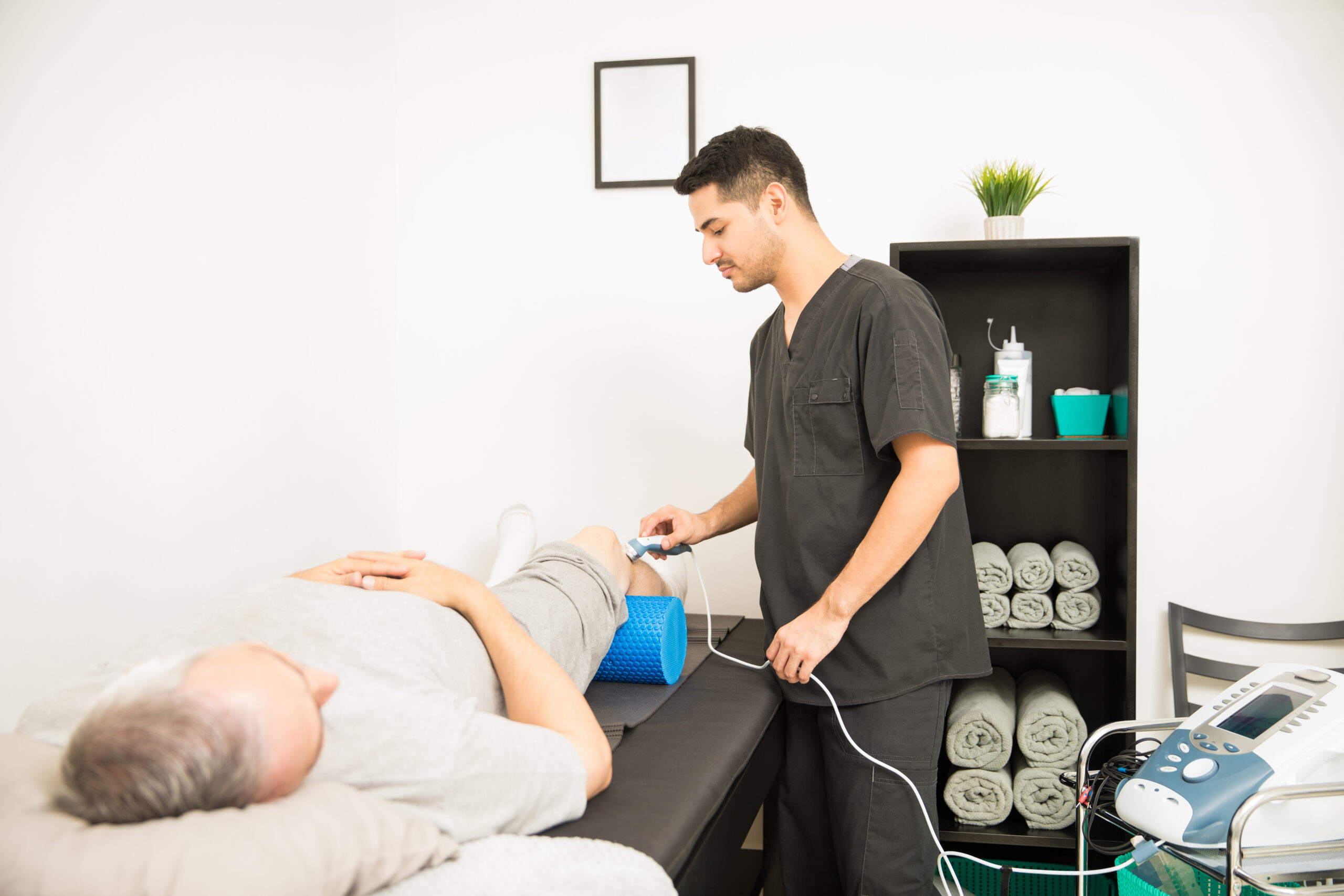
Three weeks into a new training block and your legs feel permanently heavy. Not injured, just dense, like you’re wading through wet sand even on the easy days. Someone at the gym mentions vibration therapy, and you’ve probably seen the platforms in physio clinics before, usually with someone standing on one looking faintly bored. So the real question is whether it’s actually worth adding to what you’re already doing, or just another gadget that ends up gathering dust.
The basic idea is simple enough. A machine – usually a platform you stand, sit, or rest a limb on – produces rapid, repetitive vibrations that pass through the body. That mechanical input affects the muscles and nervous system in a way normal movement doesn’t quite replicate. Some people use it as a warm-up. Others reach for it afterward, when everything feels stiff and slow to respond. Either way, it’s not something you’d use on its own. Where it actually fits into your week matters a lot more than the machine itself.
What It's Actually Doing
The vibration causes small, rapid contractions in the muscle being targeted. Reflexive, mostly – the muscle is reacting to the mechanical input rather than being deliberately flexed. That’s part of why people use it before training, as a way to wake muscles up before heavier work. After training, the same effect gets used differently, more to ease general tension and support the early stages of recovery.
None of that makes it magic. It’s mechanical stimulation, nothing more, and it tends to work best alongside whatever you’re already doing rather than replacing it.
When It's Actually Worth Trying
There’s no single moment where this becomes necessary. It just tends to fit a handful of situations pretty naturally.
Regular stiffness after training – especially in the legs – is one of the more common reasons people try it, usually worked into a warm-up or cooldown. Heavier training blocks are another, when soreness builds faster than usual and stretching alone doesn’t seem to cut through it. Coming back from a break is a third – some people use it as a gentle way to get a bit of stimulation back into muscles that have gone quiet for a while. And if your mobility work has started to feel flat, like the stretching isn’t loosening anything anymore, it can sometimes add a bit more responsiveness before you move into other work.
None of that is urgent. It’s more a case of trying it and seeing whether it actually does anything for you, since people respond pretty differently.
What a Session Actually Feels Like
Shorter than most people expect, for one thing. You might stand on the platform with your knees slightly bent, or sit with a limb resting against it – depending on what’s being targeted. The vibration itself feels like a low buzzing hum running through the muscle. Not painful. Just strange, the first time.
Most sessions run somewhere between thirty seconds and a couple of minutes per area, sometimes repeated a few times. Longer isn’t automatically better here – a trainer or therapist guiding you through it will usually adjust the intensity and timing depending on whether you’re using it to switch muscles on or wind them down.
Afterward, there’s usually a loosened, slightly buzzy feeling in the muscle. A bit like when a limb’s been asleep and is just coming back. It settles fairly quickly.
Where It Fits - and Where It Doesn't
Here’s the part worth actually understanding before you add it to your week: vibration therapy changes how a muscle feels and responds. It isn’t a treatment for an injury, and it doesn’t stand in for proper rehab, strength work, or a real diagnosis if something’s genuinely wrong.
If that heavy-leg feeling is just accumulated fatigue from training, this is a reasonable thing to add to your recovery. If it’s something else entirely – pain that’s sharper in one specific spot, swelling, a movement that’s become properly restricted rather than just tight – that’s a different problem, and it needs an actual assessment, not a few minutes on a platform.
Worth knowing too: it’s not for everyone. Certain circulatory issues, recent fractures, pregnancy, some medical conditions – people in those situations are often advised against it, so check with a healthcare provider first if you’re not sure it applies to you.
It Works Better Alongside Other Things
On its own, vibration therapy doesn’t do a huge amount. Where it earns its place is usually as one part of something bigger. A therapist might use it right before manual therapy or mobility work, to get the muscle a little more responsive first. Others fold it into a cooldown, alongside stretching or light movement, rather than treating it as recovery all by itself.
Timing tends to matter more than the vibration itself. Used at the right point – before mobility work, say, or right after a heavy session – it supports what you’re already doing. Used as a stand-in for actual rehab, it doesn’t do much at all.
The Bottom Line
You don’t need to chase this, and it won’t fix an injury. It’s a tool – a fairly simple one – that some people find useful for stiffness, warm-ups, or easing tension after a hard block of training, particularly alongside a recovery routine that’s already sensible. If your body just feels dense and tired from training, it’s reasonable to try it and see how you respond. If something feels sharper, more localized, or genuinely restricted rather than just tight, that’s the point to get it looked at properly instead of relying on a platform to sort it out.
Full Spectrum Therapy
Expert physical therapy in Folsom, CA. From deep tissue laser to in-home senior care — we restore movement, reduce pain, and help you live life fully.
QUICK LINKS
CONTACT
9580 Oak Ave Pkwy
Folsom, CA 95630
HOURS
Mon – Fri: 8:00am – 6:00pm
Saturday: 9:00am – 2:00pm
Sunday: Closed
FIND US
© 2026 FULL SPECTRUM THERAPIES. ALL RIGHTS RESERVED.